
Construct verification
Check an insert boundary, a tag or another feature against the intended design. Mark the positions that matter to your next experiment.
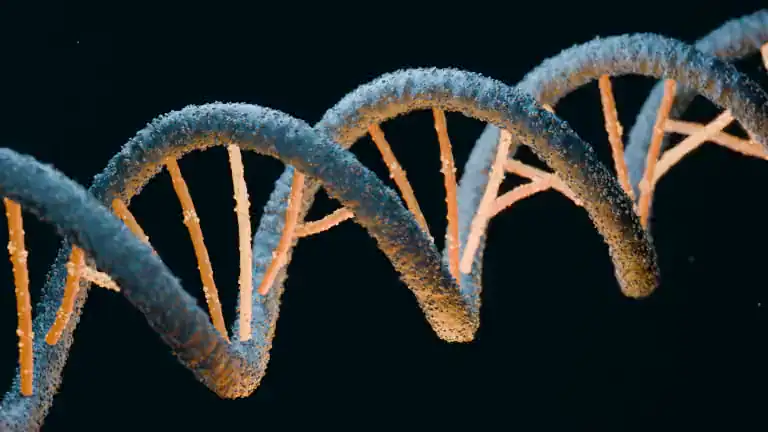
Read a short stretch of DNA from a prepared template. The sequence and its chromatogram let you check the bases at an insert junction, a marker or another site of interest.
A Sanger read starts at a particular primer. If you want to check an insert junction or a suspected base change, the read needs to cover that position. One read covers only part of a longer construct.
The chromatogram shows the signal for each base. Well-separated peaks are easier to read. Where the signal is weak or peaks overlap, the sequence may remain uncertain. Tell us which positions matter most when you request the reads.
Check an insert boundary, a tag or another feature against the intended design. Mark the positions that matter to your next experiment.
Review a suspected base change against a reference. Include the coordinate convention so a difference in numbering does not look like a difference in sequence.
Check whether a prepared PCR product contains the expected sequence. If you also need an organism identification, ask for that comparison when requesting the work.
Provide your sample list, reference and intended read direction. Mark the positions you need to see clearly.
Include the template type, available quality information and primer identity. Confirm labelling and submission requirements before sending material.
Each read is assessed for quality. Positions that cannot be called with confidence should remain marked as uncertain.
Compare the returned sequence and trace with the region you asked about. If a key position remains unresolved, that can guide a further read.
| Material or information | What to discuss before submission |
|---|---|
| Purified plasmid DNA | Provide the construct name, relevant map or sequence and proposed primer. Identify any known alteration from the reference that should be expected in the result. |
| Purified PCR products | Provide the intended target, expected product identity and available evidence of sample suitability. Multiple amplification products may require a preparation review before sequencing. |
| Sequencing primers | State the primer name, sequence and intended binding site. A familiar primer name alone may be insufficient when several versions exist; supplied-primer availability is confirmed separately. |
Before sending samples, ask us to confirm the accepted material, quantity, quality requirements and transport arrangements for your project.
A read supports conclusions only within its usable coverage. Agreement at one junction does not establish that every other part of a plasmid is correct.
A mixed trace can have several explanations, including mixed templates or technical interference. Interpreting it requires the trace and sample context, not sequence text alone.
A routine Sanger reaction uses one sequencing primer. Forward and reverse reads are planned separately so their signals can be read clearly. Please confirm the submission arrangement before combining any material.
Tell us whether you need one particular feature, a continuous stretch or the wider construct. Depending on the coverage required, we can discuss additional reads, primer walking or whole plasmid sequencing.
No. Useful read length varies with the template and the sequence itself. Mark the positions you need to resolve so we can assess the coverage you are asking for.
Tell us which region you want to check. A list of templates and primers, plus a reference sequence if you have one, will help us quote for the reads you need.