
Support a molecular testing programme
For PCR, barcoding or sequencing, use a sample list that connects each submitted specimen to its extract and quality record.
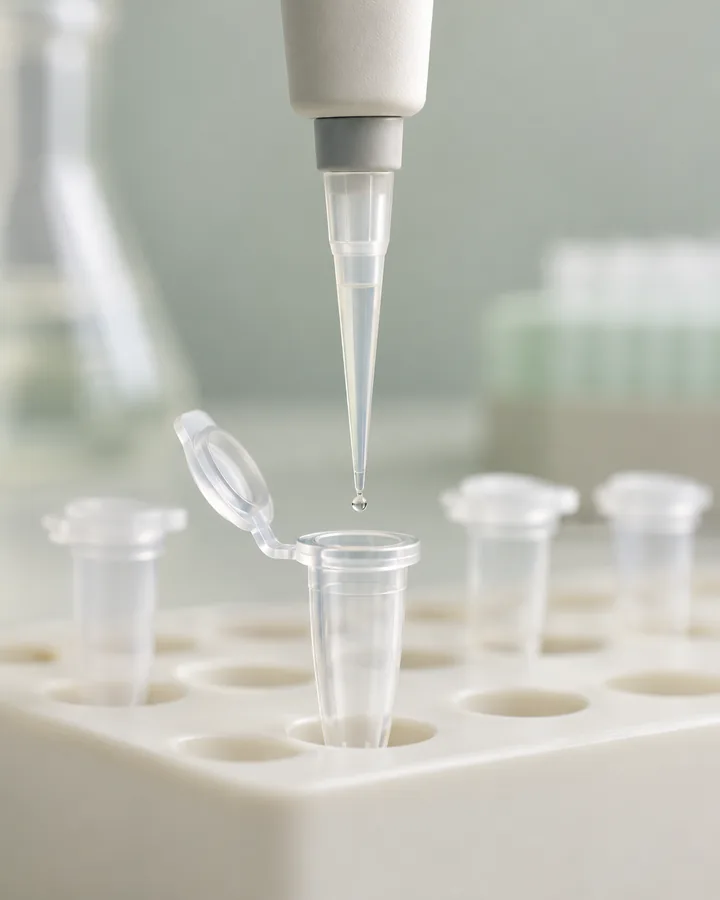
The DNA or RNA you need for PCR may have different requirements from material intended for sequencing. Tell us what sample you have and which analysis comes next, especially if the material is hard to replace.
Plant material, microbial isolates and environmental samples arrive in very different forms. What was collected, how it was stored and what you plan to measure all affect the preparation and quality checks.
Concentration tells you how much nucleic acid is present. Purity, integrity and the buffer can also affect whether it is usable in the next test. We can review these points before you commit a limited sample to further work.
For PCR, barcoding or sequencing, use a sample list that connects each submitted specimen to its extract and quality record.
For scarce or irreplaceable material, a preliminary assessment may help you decide whether to proceed with the wider study.
A common preparation method helps with comparisons. Record differences in sample composition, collection and storage that may still affect the results.
Tell us what you plan to measure, which samples belong together and whether the material can be replaced.
Ask about the accepted material, containers, labelling and transport. Include any collection records you have.
The prepared material undergoes the agreed quality checks. If its condition could affect later tests, the next step needs review.
You receive the agreed material and assessment record, or preparation can lead into a further service. The same identifiers link each stage.
| Material or information | What to discuss before submission |
|---|---|
| Biological material | Describe the organism, material type, collection date and preservation history. Confirm acceptance before submitting unfamiliar matrices or irreplaceable specimens. |
| Environmental material | Include sampling location context, matrix description and the intended target. A soil or water label alone may not provide enough information to choose a preparation approach. |
| Purified DNA, RNA or plasmid | Provide the extraction method if known, buffer, available measurements and intended use. Identify any previous freeze–thaw events or treatments that may affect interpretation. |
Before sending samples, ask us to confirm the accepted material, quantity, quality requirements and transport arrangements for your project.
An acceptable purity ratio does not by itself establish intact material or suitability for every technique. Assessment should be interpreted alongside the intended application.
Preparation requirements differ between analyses. Confirm quantities, acceptance criteria and remaining-material arrangements for your project rather than applying a generic submission threshold.
Yes. Tell us how the extract was prepared, what has already been measured and what you need to check. We can then assess whether the requested review is appropriate.
That depends on the next analysis. DNA is commonly used for sequence or identity questions. RNA is useful for studying expression. If you need both, discuss collection before it begins.
Depending on the sample, the options may include further checks, a revised preparation, replacement material or stopping work on that sample. Agree how to make that decision before submission.
What do you have, how has it been stored, and what do you plan to do with it? Include the number of samples and flag any material you cannot replace.