
Prepare a target for sequencing
A PCR product may be needed for sequence confirmation or DNA barcoding. Name the region you need to examine and whether both ends matter.
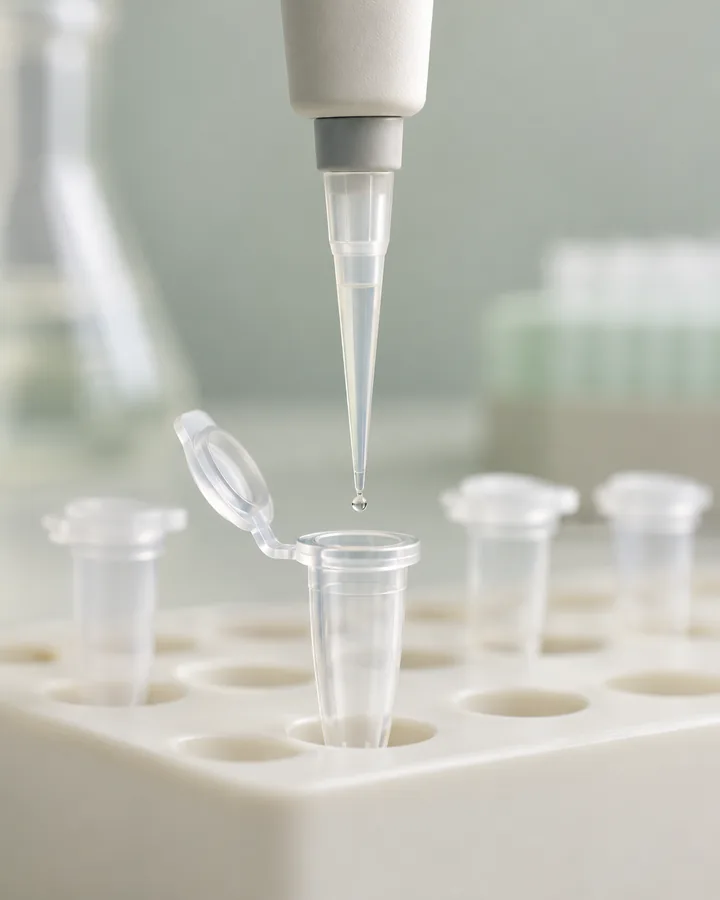
PCR makes copies of a chosen region of DNA. Researchers use it to check for a particular target or to prepare that region for sequencing. We can review the sample and the result you need before testing.
PCR focuses on a region you name in advance. A project might look for that target across a set of research samples or produce material for a sequence check. Each use calls for different evidence.
Template quality, sequence differences and substances carried over from the sample can affect the result. Controls help with interpretation. If you need to confirm the identity of an amplified product, we can discuss sequencing or another suitable check.
A PCR product may be needed for sequence confirmation or DNA barcoding. Name the region you need to examine and whether both ends matter.
Compare research samples for a selected target. Interpret the results alongside the assay controls and any limitations reported for a particular sample.
Targeted PCR can contribute to a clone check or a marker study. The need for additional confirmation depends on what you will do with the result.
Tell us what the target is, how the result will be used and what reference or previous assay information is available.
Review sample preparation, controls and any confirmation needed. Development work may need a review before a larger set of samples is tested.
Samples retain their identifiers throughout testing. A finding that falls outside the interpretation criteria is flagged for review.
Read the reported findings alongside their controls. If a result is ambiguous, ask what further evidence might resolve it.
| Material or information | What to discuss before submission |
|---|---|
| Purified DNA | Provide sample identity, source organism, preparation history and available quality information. Confirm input requirements for the selected assay before dispatch. |
| Raw material requiring extraction | Describe the material and preservation method so extraction can be included where appropriate. Acceptance depends on the matrix and intended target. |
| Existing primers and reference information | Supply sequences electronically, with target coordinates or reference accession where available. Clearly identify expected products, controls and any previously observed problems. |
Before sending samples, ask us to confirm the accepted material, quantity, quality requirements and transport arrangements for your project.
No amplification can reflect an absent target, unsuitable material or assay limitations. A negative result is meaningful only within the evaluated assay and sample conditions.
A product of the expected size is not definitive proof of sequence identity. Discuss confirmation when the result will guide consequential downstream research.
Yes. We can start by reviewing the target and whether assay development is needed. Tell us what is already known and what would count as a successful result, including any need for sequence confirmation.
Conventional endpoint PCR is mainly used to amplify or screen for a target. If you need a quantity, discuss the measurement method, standards and study design as a separate request.
Ask whether preparation can be included. Describe the material and target and confirm the submission requirements before sending it.
Tell us which target you are studying and what you need the result to establish. If you already have assay information or earlier results, include those in your enquiry.